The 4 A.M. Wake-Up Call Most Men Over 50 Quietly Live With
It isn't really about sleep. More and more men are looking at the link between prostate health, deep rest, and daytime energy and quietly rethinking the nightly routine they assumed was just "part of getting older."
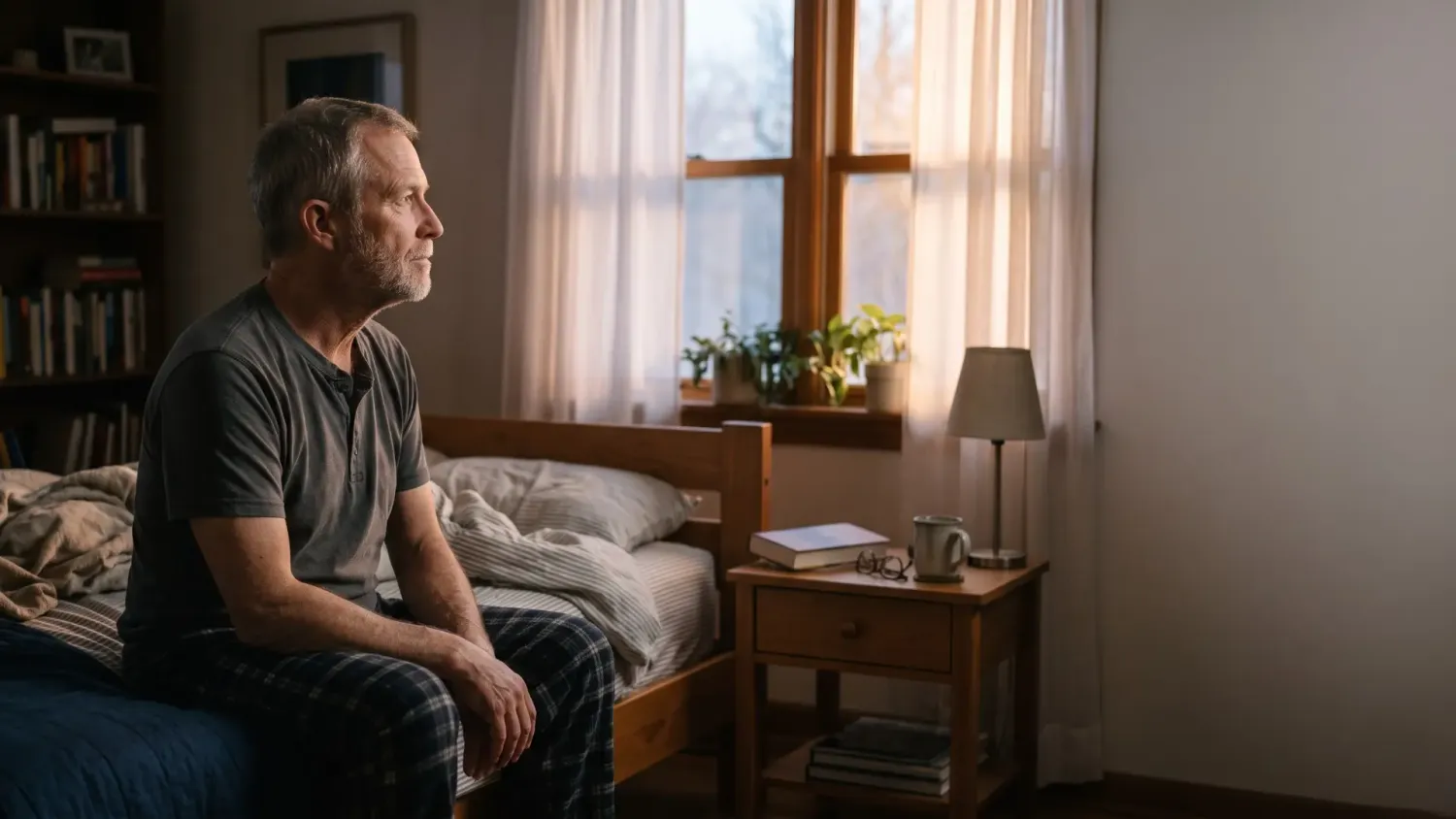
If you have ever found yourself wide awake at 3 or 4 in the morning, sitting on the edge of the bed for the second or third time that night, you already know the feeling. It isn't dramatic. There's no pain and no emergency. Just one more trip to the bathroom, one more stretch of broken sleep, and the quiet thought that this is simply what your nights look like now.
For millions of men past 50, that thought has become so normal it barely registers anymore. You adjust. You stop drinking water in the evening. You learn where the light switches are in the dark. And you tell yourself it's just age catching up.
But here is what most men never stop to connect. The problem doesn't end when the sun comes up. The broken nights follow you into the day. The afternoon energy that never quite shows up. The focus that feels half a step slower than it used to be. The motivation that takes more effort to find. A lot of what men quietly write off as getting older may actually begin in those interrupted hours before dawn.
The real cost of a restless night isn't the night. It's the day that follows it.
And the part almost nobody talks about is why it keeps happening in the first place. For a large number of men, the trigger sits just beneath the bladder, in a small gland most of us never give a second thought to until it starts making itself known. The prostate.
Understanding what is actually going on down there, and why it tends to creep up right around this stage of life, changes the way you think about the whole problem. So let's walk through it plainly, the way someone would explain it to you across a kitchen table.
First, the part almost no one explains
The prostate is a small gland, roughly the size of a walnut, that sits right below your bladder. And it has one structural quirk that quietly shapes everything we just talked about. The tube that carries urine out of your body, called the urethra, runs straight through the middle of it.
As the gland slowly enlarges, it presses in on the tube running through it, so the bladder has to work harder and rarely empties all the way.
Here is the quirk. Unlike most parts of the body, the prostate never really stops growing. It grows in your teens, settles for a while, and then begins a second, slower phase of growth somewhere around your forties. By the time many men reach their fifties and sixties, it has quietly grown enough to start pressing on that tube running through its center.
Picture a soft ring slowly tightening around a garden hose. The water can still get through, but the pressure drops, the flow weakens, and you can never quite clear the line. Your bladder responds the only way it knows how, by working harder and signalling that it is full again far sooner than it should. That is the 2 a.m. and the 4 a.m. wake-up call, explained in a single picture.
So it was never really about how much water you drank before bed. And it is not a switch that simply flips the year you turn 50. It is a slow, mechanical squeeze that has been building quietly for years, which is exactly why it tends to sneak up on men rather than announce itself.
These symptoms are extremely common and usually harmless, but the same signals can occasionally point to something that needs a doctor's eyes. Anything that comes on suddenly, brings pain, or includes blood is always worth getting checked properly. This article is about the everyday, slow-building version that most men simply learn to live with.
Which raises the question almost no one stops to ask. If the gland itself is the source of the squeeze, why does nearly every piece of common advice stop at managing the symptoms, telling you to drink less, wake up more, and wait it out? A growing number of men have started asking a better question instead. And the answer is where this gets genuinely interesting.
So why does the gland keep growing?
Age is part of it, but it is not the whole story. When you look at why the prostate enlarges, the same three factors come up again and again. And most of them have surprisingly little to do with the number on your birthday cake.
Circulation
Blood flow carries oxygen to the gland. When it drops off, prostate tissue is one of the first places to feel it.
Hormones
A byproduct of testosterone called DHT builds up with age and is closely tied to the gland slowly growing larger.
Inflammation
Quiet, ongoing irritation in the area adds to the swelling, the pressure, and the urgency you feel.
Here is the encouraging part. These three levers are exactly the ones that certain plant compounds have been used to support for generations, saw palmetto, beta sitosterol, pygeum, nettle, zinc, long before anyone gave them fancy names. The catch has always been getting them in the right combination, which is why most men never bother and just learn to live with it.
Lately a simple once a day approach has been quietly making the rounds among men in their 50s and 60s who were done waiting it out. A short presentation walks through exactly how it works, in plain language, the same way we have done here.
The simple approach men are switching to
Instead of cutting fluids and bracing for another broken night, more men are taking a few minutes to watch a short presentation that lays out the once a day approach, step by step and in plain language. It explains the why, the how, and what to do next.
Watch the Free PresentationAdvertisement. This article is for general education and is not medical advice. Individual experiences vary. Consider speaking with your doctor before making changes to your health routine.